

DC Has a Once-in-a-Generation Opportunity. Here's How We Build It.
BY Rebecca Ballard
Economic opportunity, mission-driven business, innovation, and cross-sector strategies | Turning ambitious ideas into action for DC
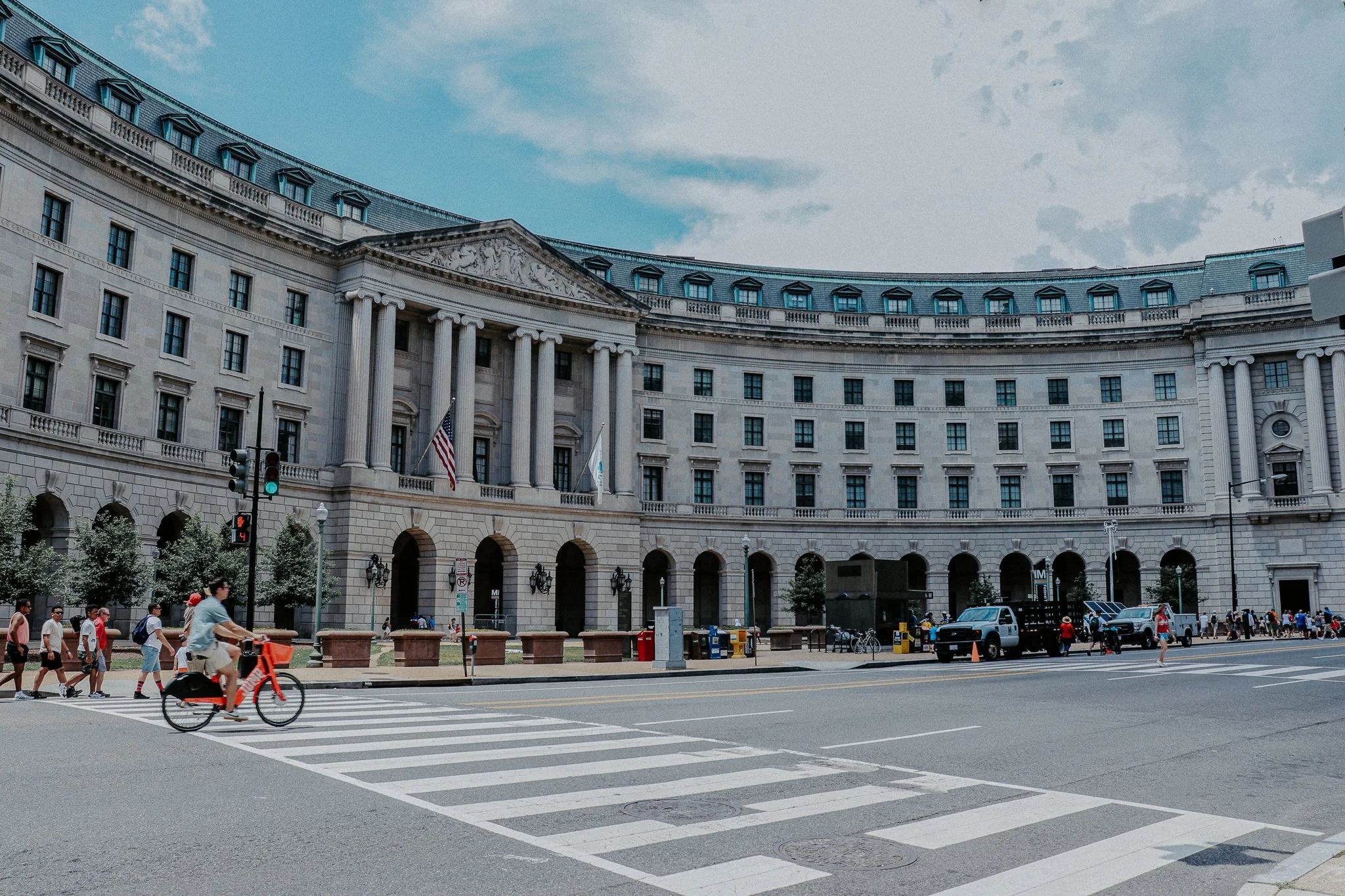
Earlier this month I learned that a friend is leaving DC. Her partner is exactly the kind of talented professional this city should be fighting to keep, but unable to find a job here after months of trying, he accepted a role at one of New York City's most sought-after financial institutions. They love DC and didn't want to go, but the economic reality made the decision for them. Paradoxically, the most educated city in America is losing the most talent.
DC Has Stopped Building
DC's construction market has not just slowed, but nearly stopped. Construction starts hit a 15-year low in 2025, down 68% from 2022. Downtown DC's net fiscal contribution has fallen by $451 million since 2019. This is a citywide fiscal crisis, not just a downtown real estate problem.
I live a few blocks from The Geneva on Connecticut Avenue, DC's largest-ever office-to-residential conversion, which required the single largest PACE loan in American history at $465 million plus a 20-year tax abatement just to break ground. Nearby at 2100 M Street, a developer paid $66.8 million, couldn't secure financing, and the lender took the building back for $20.1 million, the only bid. These are not isolated cases, and the market is telling us something critical: the financing tools that built DC over the past few decades have stopped working, and waiting for them to come back is not a strategy. We need new ones.
Building on Our Strengths: Innovation, Education, and Urbanism
DC has advantages no other city can replicate: proximity to global institutions, national power, and world-class universities and healthcare. We are a city of highly educated, hardworking problem-solvers with experience tackling major challenges.
We must invest in the industries that match both our values and our genuine competitive advantages: tech for good, life sciences, clean energy, global health and development, edtech, and the creative economy. Defense and national security tech is not our play; other regional jurisdictions have spent decades building that ecosystem, and it is not the economy our residents are asking us to build which meets our city's values.
I live off 18th Street, between Dupont Circle and Adams Morgan, and no one moved here to park there. Walkable, metro-rich neighborhoods command the highest price premiums in the region, and we should be doubling down on 15-minute cities and strong public transit for all. Streateries, the Dupont Circle deckover, Porchfest, and a theater community second in size only to New York City's: these are economic strategies that support our tax base and enhance our quality of life, and we need more of them.
Our city is facing a true public education crisis with real impact on our economic development strategy. DC spends over $30k per pupil, more than almost any other city in America. Families at peak earning years are leaving for suburbs with stronger gifted programs, more robust curricula, and true STEM programs. As a DCPS parent from a family of public school teachers, I see talented educators constrained by a system that hasn't kept pace. Students aren't reading full novels in middle school and are using poor quality edtech like 99math and Amplify Science. My twice-exceptional third grader has no dedicated 2E program here, unlike neighboring Montgomery and Fairfax counties, and gets science for half the year and social studies for the other half, a recipe for boredom that requires serious out of school supplementation. With a new chancellor comes a genuine opportunity to delve in deeply and build the education system our city deserves, tailored to our strengths and supporting our local economy.
The L'Enfant District: Where It All Comes Together
The single biggest immediate opportunity brings together innovation, education, and urbanism: the L'Enfant District, 40+ blocks of underutilized federal land between the National Mall and the Wharf. An area bigger than the Wharf, already transit-rich, and ready for everything DC does best.
Harnessing this opportunity requires a Downtown Development Corporation with real authority: coordinating land sales, developing housing across affordability levels, anchoring innovation districts, creating space for industries where we are poised to lead, and building pathways for our brilliant and mission-driven professionals to become founders and job creators. NYC just committed $4 billion in pension capital toward exactly this kind of investment. Done right, this means housing and opportunity for DC residents at every income level, with the economic value created here staying within our city.
This Is Our Moment, and We Must Seize It
What DC has not built during this crisis are the conditions to keep our talent here and unleash what they can do. I truly believe that Washington, DC is the greatest city in the world to build a life: a city of purpose, beauty, walkability, art, passion, culture, diversity, and amazing neighbors and friends. We need an economy as extraordinary as we are, and a local government determined to build it. The moment is now.
