

Stop Asking Permission: A Good Girls’ Guide to Doing Good
By Rebecca Ballard
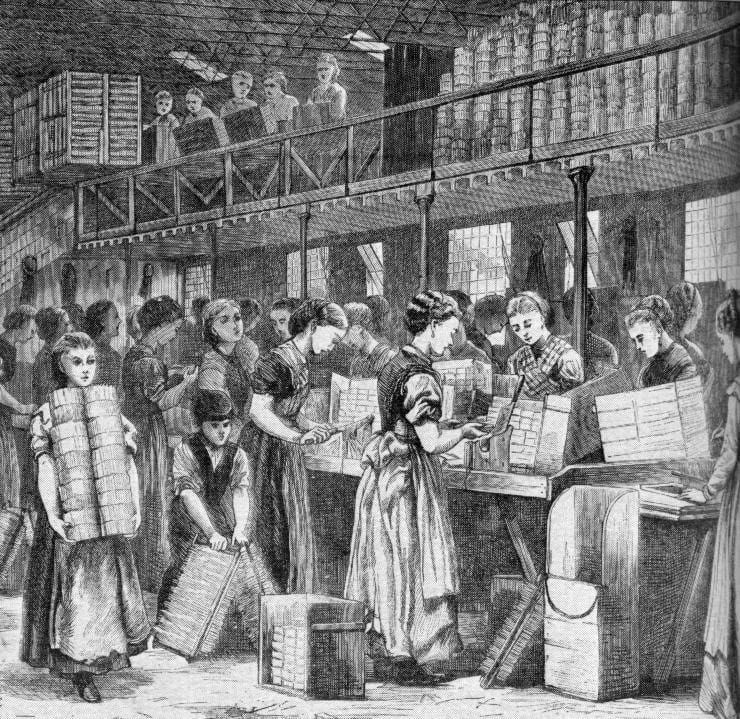
The workers everyone assumed could never organize: poor, young, and female, became the first unskilled workers in London to strike and win.
https://www.historic-uk.com/HistoryUK/HistoryofBritain/Match-Girls-Strike/
Tracy Flick, SGA president
I was a Tracy Flick. Number one in my class. Class president. A girl with goals and a color-coded plan to meet them. I had a habit of turning things in early and a desire to go to a top university "with scholarships" (insert that Tracy voice if you've seen the film). Ambitious at times would have been an understatement, unless compared to my organizational skills.
I also did not like getting in trouble, and I worried and sometimes agonized over what people thought of me. However I could not stand a bully, and I had a bad habit of saying so out loud in word and deed, usually directly to the bully. One time I said it so loudly that I transferred schools the next year, after dealing with the social consequences. That felt like the system failing; I didn't yet understand it was the system working exactly as designed.
The scoreboard changes, and nobody tells you
The traits that earn you an A at seventeen will get you in trouble at work. Ask too many questions or refuse to laugh at the sexist joke and you're not a team player. Insist on getting the number right and you're difficult or even, ironically, naïve. Say the uncomfortable thing in the meeting and you're not ready for leadership. Nobody changed, the scoreboard did. And nobody sends the memo.
DC is full of women who never got that memo. I've stood on a playground next to a woman who argues before the Supreme Court, had tea with another who ran a state's entire COVID response, and brainstormed ideas for my businesses with a friend who speaks six languages; and now many of our country’s most accomplished women are underemployed or even unemployed. We were the rule-followers. We were told that excellence plus patience would be rewarded. And I need to tell you, plainly, that it is not true in DC right now.
Look at what happened. USAID was shut down as of July 1, 2025, cutting roughly 94% of its staff, a workforce that was 59% women. The Kennedy Center's board was replaced in February 2025; on September 16 it voted to close the main building for two years, and more than a dozen staff lost their jobs. Nonprofit grants were terminated in waves. Offices built to advance equity, ones that find and cultivate talent, were closed by executive order. The federal agencies hit hardest were the ones women staffed most: Social Security at 66%, Veterans Affairs at 64%, Education and HHS at 63%, the EEOC at 62%. The nonprofit sector, now facing a funding crisis, is 66% women. And the federal diversity data that would let us track all of this was quietly taken offline.
I know this one personally. When the pandemic hit I had a two year old and a baby, and I became the stay-at-home (and I mean AT HOME) parent I never wanted to be, at real cost to my career. A lot of us did some version of that, and it knocked women's workforce participation back to 1980s levels. We were just getting back on our feet when the second Trump administration arrived. And then we watched the ground we'd stepped back onto get pulled out from under everyone like us.
Alone, spelled backwards
Lately, watching smart, spunky heroines do good is how I unwind at night. Enter another film character: Enola Holmes (a few spoilers on the series forthcoming), who turned out to be more of a thesis than an escape.
Enola is "alone" spelled backwards, and alone she is for much of the trilogy. She is at least as sharp as her brother Sherlock and frequently ahead of him. He gets the fame, the rooms, and the rank. In the second film she cannot persuade a single client to take her detective agency seriously after solving a mystery that changed the course of history, and the one case she does take, a girl missing from a match factory, walks her straight into the matchgirls' strike of 1888.
That strike was real, and so was Sarah Chapman. Girls in East London were paid pennies, fined for talking or for using the toilet, and poisoned and even killed by the white phosphorus they handled. In July 1888, roughly 1,400 of them walked out. It is remembered as the first industrial action taken by women, for women, and it worked. They formed the largest women's union in Britain and within a generation, white phosphorus in matches was banned by Parliament. They were girls. Many of them teenagers. They had no vote, no capital, no title, and absolutely no permission. And they inspire me to this day.
Cause good trouble, and do it your way
Enola marries, she keeps her name, and she is loved. You do not have to become hard to become effective. You can dismantle an unjust system with impeccable manners, and calligraphy so beautiful they'll never notice you're also better than them at math. You can be warm and funny and unabashedly yourself and still refuse to round the number down.
But here’s the hard part: you do have to be willing to be disliked. And you also have to be willing to be early, which feels almost exactly like being wrong.
Last week at BLD Southeast, Aurora Archer gave the keynote, one of the best speeches I've heard all year. She called it the penalty box, describing what happened in her own corporate career when she started asking who was benefiting from the decisions being made. I have spent time in that box. So has every woman I admire. Which is precisely why none of us should be doing this alone.
Ladies, it's time for us to build, together
DC is in crisis. The highest unemployment in the country. A federal government being dismantled around us. No vote in Congress to defend ourselves with. And here is the truth I keep coming back to: DC is not going to be rescued by anyone outside of it.
On Friday night, Washingtonians linked arms in a human chain around the Kennedy Center. A year earlier, after so many staff had already been unjustly fired, my friend Sara Curtin played the Millennium Stage and used her set to stand with the center's workers and call for a free DC. She sensed it would be her last time in the building. The next night, Alexandria guitarist Yasmin Williams, who had spent months publicly sparring with Kennedy Center president Ric Grenell, took the same stage and kept playing while a group given passes by his office booed and heckled her. Nobody gave either of them permission.The disposition that got so many of us this far, the credentialed patience, the wait-your-turn, the excellence-will-be-noticed, cannot meet this moment. This moment needs builders. It needs the women who see the gap and fill it without being asked.
Last week the mission-driven business community came to Washington for BLD Southeast, and the room was full of people who stopped waiting for the market to reward the right thing and went and built the thing instead. We keep asking what the future of business looks like: it is already here, in a movement that started twenty years ago and now spans more than 10,700 certified B Corps across 104 countries, employing more than a million people.
The argument that mission-driven business is viable has been won. So do not wait for those in power in this moment to start rewarding the right thing. Build the company that does the right thing, and don't apologize, just be fabulous. And as Aurora said, it's time to stop asking whether it is our turn, or for permission to speak our truth.
So here's the assignment, from one good girl to another. Get into some good trouble. Be ambitious and authentic. Bold and brilliant. Savvy and sassy. Ask the question. Know the data. Say the truth out loud. And do not ask permission.
Nobody is coming to give it to us. So we give it to each other.
I will see you in the good trouble.
